


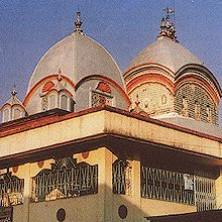
Kalighat Temple
Kolkata
Presiding Deity:
Kali
The Kalighat Kali Temple, located in Kolkata, West Bengal, India, is a prominent Hindu pilgrimage site dedicated to the Goddess Kali. This temple holds immense significance as one of the 51 Shakti Peethas, places where it is believed the body parts of Goddess Sati (the divine consort of Lord Shiva) fell during Shiva's cosmic dance of destruction. Legend states that Sati's right toes fell at this specific spot.
Deities
The primary deity worshipped at Kalighat is Goddess Kali, depicted in a unique form unlike many other Kali idols in Bengal. Her idol, made of black stone, features three prominent eyes, four hands, and a long, protruding tongue made of gold. She holds a scimitar and a severed head, symbolizing the conquest of divine knowledge over the human ego and the path to liberation (moksha). Additionally, a shrine dedicated to Radha Krishna can be found within the temple complex, showcasing the blend of Shaiva and Vaishnava traditions.
Significance and worship
Kalighat Temple is a revered pilgrimage site, especially for the followers of the Shakta sect of Hinduism. The temple's spiritual atmosphere and age-old customs create a deeply enriching experience for all who visit, drawing devotees from across India and beyond seeking blessings and fulfillment of wishes.
Devotees come to Kalighat for various reasons: Seeking Protection and Strength: Kali is revered as the protector from evil and the bestower of strength.
Overcoming Obstacles: Many believe worshipping Kali helps overcome challenges related to career, finances, and family life.
Blessings for Childless Couples: The holy tank within the temple complex, Kundupukur, is believed to grant children to couples bathing in its waters.
Spiritual Enlightenment and Liberation: Worship at this Shakti Peetha is believed to guide devotees towards spiritual enlightenment and liberation (moksha).
Daily rituals include morning and evening Aarti, along with offerings of flowers, sweets, and red hibiscus. Animal sacrifice, specifically of goats, is also a traditional practice at the temple, representing a symbolic offering to the goddess. The temple is particularly vibrant and crowded during festivals like Durga Puja, Kali Puja, and Poila Boishakh (Bengali New Year), when special rituals and celebrations are observed
Saranam.com only facilitates rituals at temples for those who are unable to physically be present at the temple for various reasons.
1.We are not an agent/representative/official website of any temple and perform these services through our own network of representatives.
2.We are not a temple. We are not a religious movement. We get no money from particular religious institutions or leaders. We are not pushing a particular spiritual agenda.
3.All pujas or other rituals offered through our website do not involve any kind of animal sacrifice.
4.The charges for services include charges collected at the temple, cost of purchasing offerings, conveyance and various other charges towards fulfillment of the order and are subject to change from time to time without notice.


