


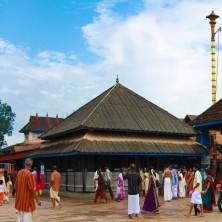
Chottanikkara Bhagavathy Temple
Kochi
Presiding Deity:
Bhagawati
The Chottanikkara Bhagavathy Temple is a revered pilgrimage destination in Kerala, renowned for its spiritual healing powers. Located in the village of Chottanikkara, a suburb of Kochi in the Ernakulam district, the temple attracts thousands of devotees seeking solace and relief from various ailments.
Deities
The presiding deity, Goddess Bhagavathy, or Rajarajeswari (Adiparasakthi), is worshipped in three forms throughout the day:
Morning: As Goddess Saraswati, draped in white.
Noon: As Goddess Lakshmi, in crimson.
Evening: As Goddess Durga (Mahakali), decked in blue.An idol of Lord Vishnu is also on the same pedestal, giving the goddess the name Ammenarayana or Lakshminarayana. The temple complex also includes the Keezhkavu temple, dedicated to Goddess Bhadrakali, a fierce form of the divine mother.
Legend and significance
A popular legend surrounds a tribesman named Kannappan, who once intended to sacrifice a calf to Goddess Kali. After his daughter pleaded for the calf's life, she died mysteriously a few days later. The priest revealed that Kannappan was punished for forcibly sacrificing calves, and a divine stone idol appeared where the calf stood, representing Vishnu and Lakshmi. Another tale involves the saint Vilwamangalam Swamiyar, who discovered the Keezhkavu Bhadrakali idol in the temple pond, known as Yakshikulam. The temple is known for its divine energy, with the main deity believed to be a swayambhu, or self-revealed idol.
Remedies and rituals
The Chottanikkara temple is particularly famous for curing mental illnesses and relieving afflictions from evil spirits.
Guruthi Pooja: This evening ritual at the Keezhkavu temple is performed to ward off negative energies.
Bhajanam: Devotees seeking remedies stay on the temple premises for a period of prayer and meditation.
Nailing ritual: Near the Keezhkavu temple, a Pala tree is covered with long nails, which some devotees hammer into the tree using their foreheads in the belief that it can disable the evil spirit afflicting them.
Thulabharam: Devotees make offerings of items equivalent to their body weight.
Saranam.com only facilitates rituals at temples for those who are unable to physically be present at the temple for various reasons.
1.We are not an agent/representative/official website of any temple and perform these services through our own network of representatives.
2.We are not a temple. We are not a religious movement. We get no money from particular religious institutions or leaders. We are not pushing a particular spiritual agenda.
3.All pujas or other rituals offered through our website do not involve any kind of animal sacrifice.
4.The charges for services include charges collected at the temple, cost of purchasing offerings, conveyance, and various other charges towards fulfillment of the order and are subject to change from time to time without notice.


