


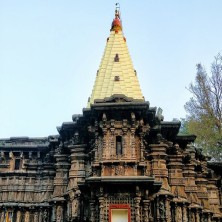
Mahalakshmi at Kolhapur
Kolhapur
Presiding Deity:
Mahalakshmi
The Mahalaxmi temple, also known as Ambabai Temple, is a revered Hindu pilgrimage site located in Kolhapur, Maharashtra. The ancient city, formerly known as Karveer, is situated on the banks of the Panchganga River.
Deities
The temple's central deity is Goddess Mahalakshmi, the embodiment of wealth and prosperity. The three-foot-tall, black stone idol, believed to be self-manifested, depicts the goddess with four hands, holding symbolic items: a mace, a shield, a citron fruit, and a drinking bowl. It is also one of the three-and-a-half Shakti Peethas in Maharashtra, a sacred site where parts of Goddess Sati's body are said to have fallen. The complex also houses shrines to Mahakali, Mahasaraswati, Lord Vishnu, and Lord Ganesha.
Legend
According to legend, the city gets its name from the demon Kolhasura, who was defeated by Goddess Mahalakshmi. The demon had tormented the gods and sages and asked the goddess to name the city after him as his dying wish. In another tale, Kolhapur is considered the eternal abode of Goddess Lakshmi, while her consort Lord Vishnu resides in Tirupati. Devotees often visit both temples to complete their pilgrimage.
Significance and Remedies
Devotees visit the temple to receive blessings for wealth, prosperity, and spiritual fulfillment. Remedies sought include:
For prosperity and career growth: Offering coconuts and yellow-colored clothes to the goddess.
For marital bliss: Providing bangles and a chunni (scarf) to the deity.
For protection: Offering kumkum (vermilion powder).
Saranam.com only facilitates rituals at temples for those who are unable to physically be present at the temple for various reasons.
1.We are not an agent/representative/official website of any temple and perform these services through our own network of representatives.
2.We are not a temple. We are not a religious movement. We get no money from particular religious institutions or leaders. We are not pushing a particular spiritual agenda.
3.All pujas or other rituals offered through our website do not involve any kind of animal sacrifice.
4.The charges for services include charges collected at the temple, cost of purchasing offerings, conveyance, and various other charges towards fulfilment of the order and are subject to change from time to time without notice.


